Answering From Your Own Documents: What It Really Takes
Pointing a chatbot at a folder of PDFs is the easy part. Making it answer correctly, in Arabic, with a source you can check — that is the project.
Valeur X Team
Technology & Industry
Every company has the same idea within a week of trying a chatbot: point it at our policies, our contracts, our product manuals. It is a good idea. It is also where most internal AI projects quietly stall.
Your documents are worse than you think
The PDFs are scans. The policy exists in three versions and none of them carries a date. Two departments use different words for the same thing. The model will answer confidently from the outdated version, and nobody will notice until the day it matters.
- One owner per document set, and a date on every file
- Scanned Arabic needs OCR before it is searchable at all
- Tables and forms need extracting, not flattening into prose
- Retired documents must be removed, not merely superseded
Every answer needs a source
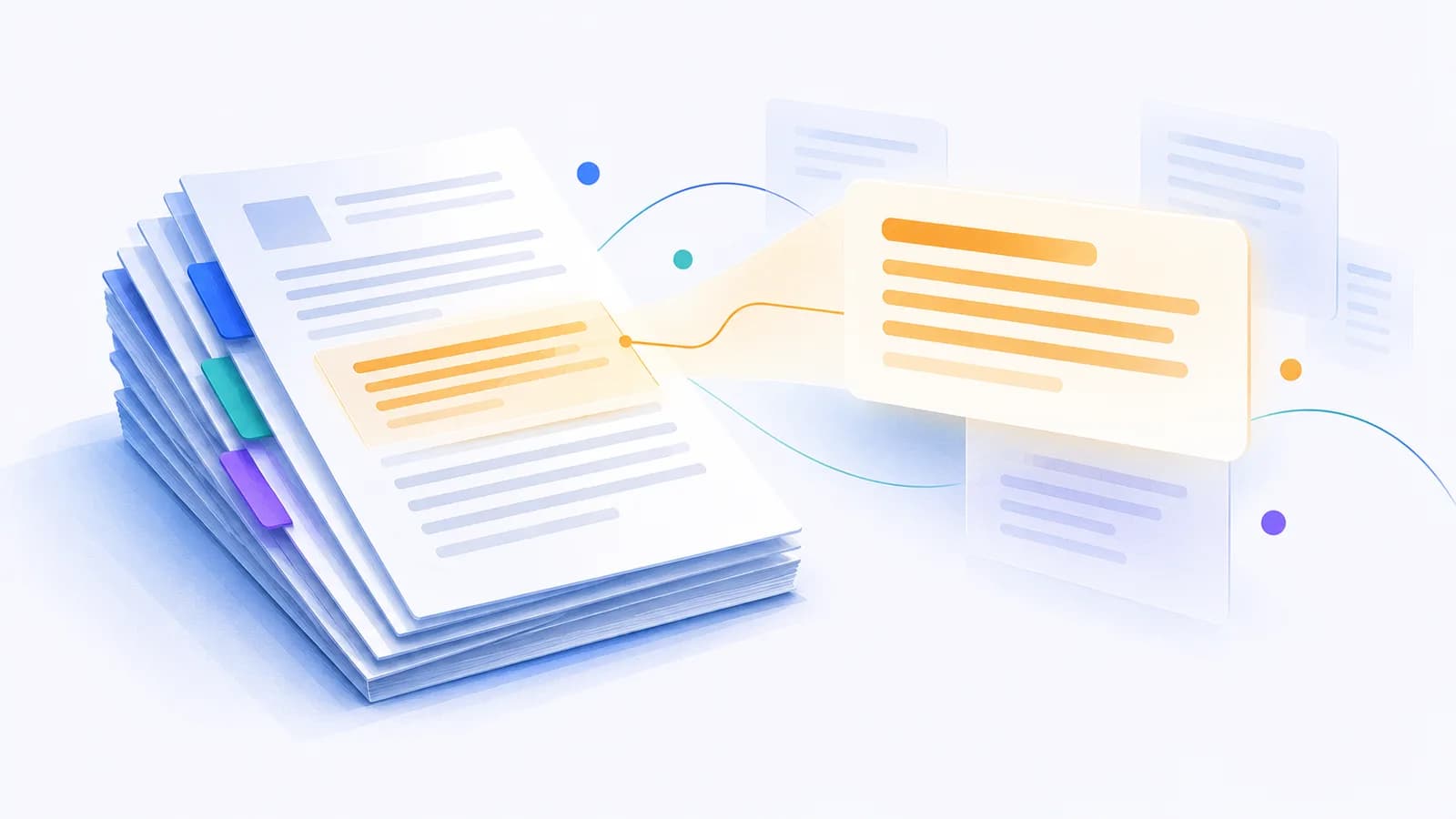
The one feature that decides whether staff trust the system is a link to the paragraph the answer came from. With it, a wrong answer is a correction someone makes in a minute. Without it, a single wrong answer ends the pilot.
An assistant that says “I could not find this” is worth more than one that is confident and wrong once a week.
Arabic and English in the same index
A Saudi company's documents are mixed. The search has to find an Arabic policy when the question is asked in English, and it has to cope with the same technical term appearing transliterated three different ways. That is solvable, but it has to be designed in rather than discovered later.
Done properly this is the highest-return AI project for most companies: it removes the twenty minutes a day that everyone spends hunting for the document that answers a question somebody has already answered.